

Saints and Heretics
Yes, I'm talking about you.

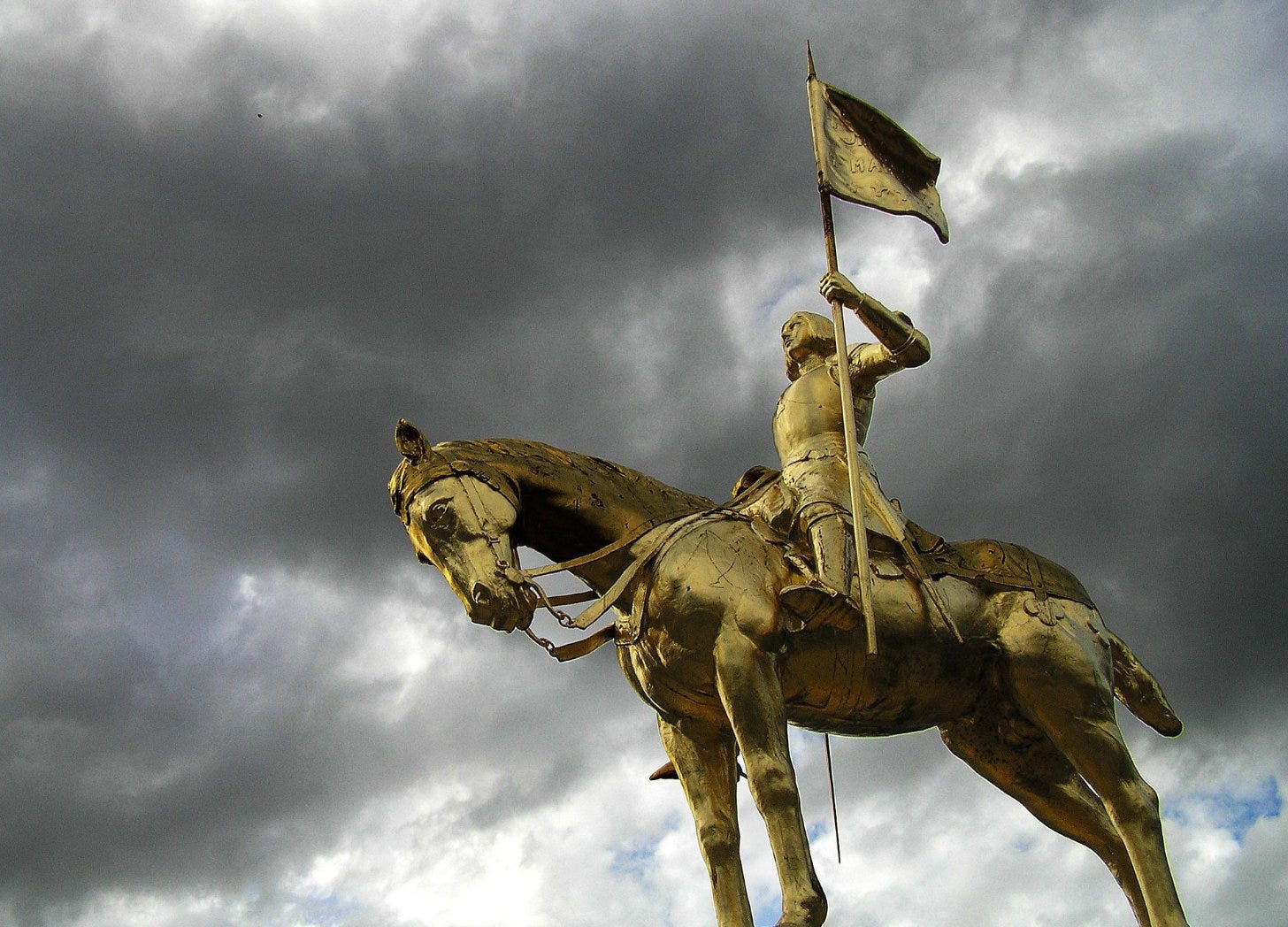
Inside every writer, there are two competing factions. Not wolves, but inclinations. We have both the desire to fit in and the desire to break the mold, the instinct to follow the rules and the drive to think for ourselves. The wish to be popular and the desire to be great. Maslow’s hierarchy of needs is stacked like a pyramid, but sometimes the layers conflict. The safety of community may ask that we eschew personal fulfillment. An apotheosis may require we leave the community.
This is the conflict through which true believers become heretics and heretics become saints.
In writing, there are rules – the methods and techniques that make a successful story. What to do and what not to do. We want to learn the magic formula – the tricks and tips that transform an unknown writer into a bestselling author. I haven’t experienced it, but I bet having 100,000 readers generates a damn fine sense of belonging.
But at the same time, we want to be recognized for our unique talents. We chafe when someone suggests we write to formula. We don’t want to be merely successful, but respected. We want to be known for our creativity, the originality of our writing, and our keen insights. We have to understand the rules of grammar, spelling, and syntax, or we risk looking foolish. But also, we admire the writers who take risks, who play with language, who fashion new words from old, who break molds. As a rule, writers love eccentric writers. Oscar Wilde, Gertrude Stein, Ernest Hemingway, Tom Wolfe, Anne Rice. Who doesn’t want to live freely and write with a bit of style?
In Mark Danielewski’s House of Leaves, sections of prose are typeset to force the reader to turn the book sideways and then upside down in order to continue reading. In other places, the text is set in backwards type, presumably asking the reader to hold the book up to a mirror. The design mirrors the experience of exploring the haunted house in the title, as well as various characters’ descent into madness.
This technique isn’t for everyone. The novel is described as post-modern. A cranky reader (ahem) might be tempted to describe it as post-intelligible. But as an object of art, it’s a stunning accomplishment by an writer with vision, who decided not to follow what we’d likely consider to be the most basic rule for writing a novel: that the reader be able to read it. Mark Danielewski is definitely a heretic. On the other hand, his second novel was nominated for the National Book Award, so he’s at least been considered for sainthood.
You may not wish to create an impenetrable slab of writing, but do take a few moments to acknowledge both sides of your mind. Appreciate the fact that there are rules of good writing and repeatable steps to success, as well as your soul’s desire to color outside the lines. Reconcile your inner saint and heretic.
Know anyone who’d like my blog? Please forward today’s post! I’d love to hear from them. Need more content? Join my mailing list!