

Strength to Strength
Will Remains Writing for June 2026


Greetings from the 12th floor, where June scooted by faster than a puppy with a mystery object in her mouth. Time is accelerating, nowhere faster than in my knees, which apparently decided to turn 60 before I do. My chiropractor has been working miracles on my back and neck recently. I wonder if he does kneecaps?
Greetings from the 12th floor, where June scooted by faster than a puppy with a mystery object in her mouth. Time is accelerating, nowhere faster than in my knees, which apparently decided to turn 60 before I do. My chiropractor has been working miracles on my back and neck recently. I wonder if he does kneecaps?
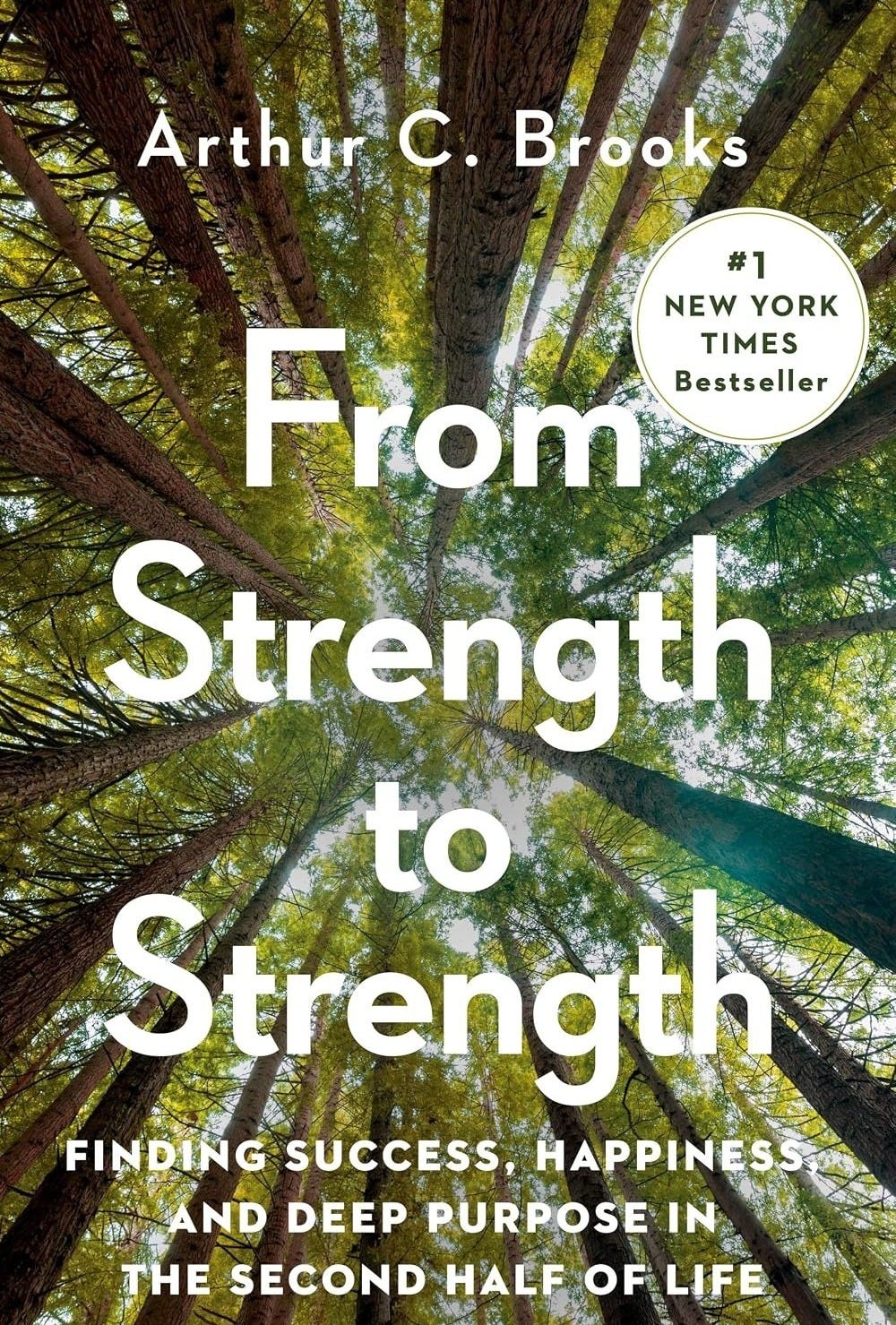
Speaking of age, I recently finished Albert Brooks’ From Strength to Strength: Finding Success, Happiness, and Deep Purpose in the Second Half of Life, a motivational book for those who - like me - are on the downslope of midlife and wondering how best to leverage whatever we have left.
Though Brooks tends to address himself to high-end professionals and entrepreneurs - the type of person I imagine would hire Brooks as a life coach and thus his true audience - the first half of the book presents some interesting thoughts on the nature of human creativity, how it powers us forward, and what not to do when our skills inevitably decline.
Brooks’ position is that skill and productivity have a half-life. Essentially, he suggests — and social science seems to support - that human achievement rises until it peaks somewhere in the late 30s to early 50s. In other words, half of your life’s work will be achieved before your peak and half after, with the first half more significant and the second noticeably less so. This is natural, but Brooks suggests problems begin when we ignore the turning point and carry on in the mistaken belief that we will always command the energy and enthusiasm of our youth.
For some, the half-life is shorter and the midpoint occurs much earlier in life. Athletes and musicians may fall in this category. Olympians and pop stars tend to accomplish their most notable work by age 30. The numbers show that Nobel winners generally achieve their greatest innovations and discoveries in their 20s and early 30s. For others, accountants or entrepreneurs, a career start may be delayed and the shelf life extended, so that the mid-point hits sometime in the mid-40s to early 50s. For writers, Brooks says the decline sets in between 40 and 55.
And here I’d convinced myself that I’m only getting started and my best days are ahead.
Fortunately, there is a second act, but it requires acknowledging the gradual fade-out of the skills that helped us accomplish the first. Brooks calls our early life skills fluid intelligence, the ability to reason, think flexibly, and solve problems. Here I might also insert the element of drive, the hunger for innovation and recognition. When humans refuse to adapt to their declining skills and/or a weakened drive to achieve, we get the gold medalist who embarrasses himself competing against younger and stronger athletes, the string of mediocre films or record albums, and the stagnating business professional or entrepreneur who can’t adapt to new markets or ideas.
According to Brooks, a happy second act requires that we lean into another kind of intelligence: crystallized intelligence, the ability to use and share knowledge gained in the past. The young are better able to chase new facts, but the old have the benefit of collected wisdom. So, for example, lawyers might take on a mentoring role, film directors turn to producing, and Nobel laureates lean into teaching and lecturing. Those who acknowledge the change and adapt to their crystallized intelligence are happier, create better work, and leave a more lasting legacy than those who do not, Brooks says.
Which is a much nicer way to say “Those who cannot do, teach.”
Interestingly, I have become more amenable to the idea of sharing what I know about creativity and craft, though I’m more comfortable in the role of wizened burnout than stuffy professor. I haven’t given up on the creative side, but I’m not as hungry for the validation I needed when I was younger.
When I was a student pursuing a degree in English and a career in writing, everyone asked if I wanted to teach. I’ve noted my frustration about this elsewhere. I never had any intention of teaching, in part because most of the teachers I’d known had been so goddam miserable. Today, I could be convinced to teach a basic class and in fact my blog is my way of paying forward what I’ve learned. I’m neither an expert nor an innovator but I’m a fantastic hoarder and I’ll talk your ear off if you’ll let me.
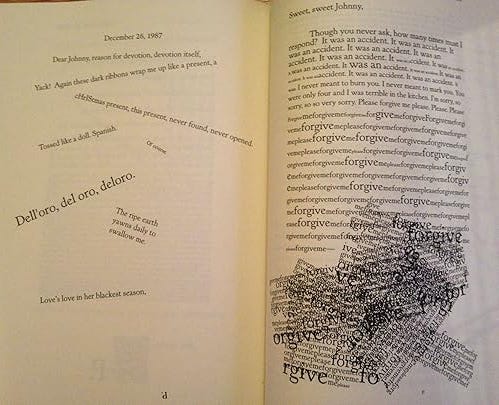
However, while I agree that our capabilities slow as we age and our interests change accordingly, I’m not entirely convinced that writers always do their best work before their 40s. Perhaps that’s true of writers who want to break things, creating unreadable novels or poems that elevate visual form over meaning and communication.
It may also be true of writers like Brooks, who use their writing to sell themselves or a certain philosophy. I have come across similar writers in the self-help/motivational arena who write one good book but whose follow-up work does little more than repackage their early ideas under new titles.
Fiction writers, on the other hand, need time to ripen. Older writers may not have the drive - or the energy - to be differently different but we do have our crystallized intelligence, the accumulated wisdom of what we’ve learned and observed. We’ve seen some shit. We have context. And we don’t need to teach a class to pass that along.
Also in this letter:
Posts from June 2026
WIP News
Writing Advice
A Parting Song
Monthly Posts
I started a new blog series last month, inspired in part by the themes that have emerged in my blog over the past few years, as well as what I perceive to be my improving skills as a writer. One of my recurring themes is authenticity, that nothing matters more to creative work than the raw honesty of the creator and that nothing will do more to free your creativity than embracing your full authentic self. I’ve learned a lot about confidence. I’ve read lots of good advice that might have changed the course of my life if I’d read it sooner.
In connection to my creative work, I wish I’d known how to recognize the stories that were going on around me. I wish I’d had the confidence - and permission - to write about what happened to me and my friends and my community, during the time it was happening, when it was fresher in my mind, when the details were clear, and the emotions sharper. I wish I hadn’t listened to negativity and bad writing advice.
So, in keeping with the above themes of authenticity and sharing knowledge, this new series explores some writing concepts I wish I’d understood when I was younger. If you struggle with what to write or where to start, I did too. This is what I’ve learned about it.
Write With Me: Introduction
My Turn: Introduction
Where Do You Start?
My Turn: Shame and Permission
What Do You Know?
My Turn: But What Do I Know?
What Do You Feel?
My Turn: What I Feel
WIP News
I don’t want to brag, but I had another solid writing month. I finished another four chapters in the novel in progress and just as improbably, cut four chapters from the back half of the book. If you’ve been following my progress, you might recall that I hit a roadblock about a year ago that prompted me to back to ground zero in the story to create a new outline.
Despite a few weeks of work, I still had some gaps in the story, mostly transition scenes between big moments, but I was sufficiently satisfied with the overall arc that I anticipated being able to figure out what I needed when I got there. As I reached the halfway point, I decided to flesh out the next batch of chapters to see where I needed more weight or what might need some buildup. As I looked ahead, a realized that a number of the placeholder chapters either didn’t need to be there or wouldn’t require as much space as I’d left for them. i was able to cut a few scenes completely and combine the rest, cutting about 10 percent of the novel before I’m remotely close to the point where I need to start serious cutting.
I may have a few places where I need to address pacing or foreshadowing but now I have the space. I also have more room to go back to add description, backstory, and motif that I’ve probably skimped. And I should still pull into the driveway with about 100,000 words. I wish it were going faster, but at this stage, I write slowly. It will take the time it takes, but I’m feeling good about a fall wrap-up for this draft.
Writing Advice
I follow about 30 blogs sharing writing advice and bookmark the good stuff. Here are some of the best posts from June:
“Writing Away From Yourself: How to Fictionalize a Character” - Courtney Maum, Jane Friedman
“3 Ways to Deepen Your Novel’s Premise” - Janice Hardy
“Writing the City as a Character” - Evan Marks, Writer’s Digest
“What Makes Human Storytelling Human” - Donald Maass, Writer Unboxed
“The Unreliable Narrator: How to Deceive Readers Without Losing Their Trust” - C.S. Lakin
A Parting Song
Paul McCartney has a few years on me, but having spent the last year or so looking back on a relatively wasted youth, I can appreciate his sense of melancholy and loss. Of course, one of us is looking back on a youth spent in the world’s greatest rock band, but we can’t all be Beatles.
These aren’t his greatest lyrics or most innovative arrangements, but unlike a lot of his post-popstar work, it feels honest. And if his voice sounds frail and he can’t quite hit those high notes, well…who can these days?
Listen on Spotify or watch the video below.